


Company Profile
Yangzhou Shineyo Lighting Technology Co.,Ltd. estalished in 2013. The company is engaged in the research and development of solar lamps. A comprehensive lighting company integrating production, sales and service, committed to green environmental protection and sunshine. The main products are: solar street lights,LED street lights, street light poles,solar flood lights and traffic lights.
Why Choose Us
Our factory
Yangzhou Shineyo Lighting Technology Co.,Ltd. estalished in 2013. The company is engaged in the research and development of solar lamps. A comprehensive lighting company integrating production, sales and service, committed to green environmental protection and sunshine.
Our product
The main products are: solar street lights,LED street lights, street light poles,solar flood lights and traffic lights.
Reliable quality
The company has a high reputation in China for its professional production of new road lighting lamps with advanced level. Our products are reasonable in design, beautiful in appearance and reliable in quality.
Our service
Customers can contact us at any time through the website, phone, email, etc. Our professionals will provide customers with quotes within 24 hours, and answer a variety of product-related questions.

Aluminum lamp posts are lightweight, have good wind resistance and are easy to process, and can be customized with various styles and appearances of street lights.
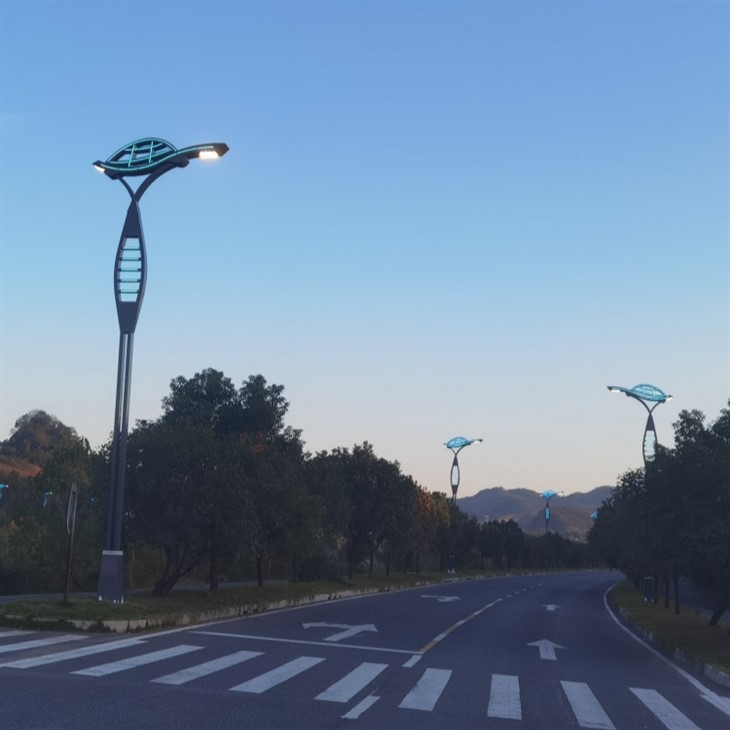
In urban streets, parks, squares, gardens, villas, by the sea, and other areas, this solar street light pole is extensively used.

Traffic applications use tubular steel poles to support traffic signals and important road signs. Traffic poles, which are made to function well in both low- and high-volume environments, are essential for informing vehicles of impending traffic signals and assisting in preserving the flow of traffic.

High mast light pole generally refers to a new type of lighting device composed of a steel conical lamp pole and a high-power combination lamp frame that is over 15 meters long. It consists of a lamp head, internal lighting fixture electrical, pole body, and basic components.

A safer atmosphere is created by the Outdoor Street Light Pole, which greatly improves visibility in a variety of outside spaces, such as roadways, patios, backyards, and exteriors.

Outdoor LED Solar Street Lighting Light Lamp Pole 3m 5m 6m 7m 8m 9m 10m 12m,5 meter street light pole.5 Meter Street Light Pole meets the lighting requirements of most roads while saving material costs. A height of 5m is more suitable for installation, providing convenience for the installation of lamp posts.

Solar Led Street Light with Pole
Solar led street light with pole has a wide range of application scenarios, such as urban streets, rural areas, parking lots, high highways and so on. This product makes lighting more convenient.Solar LED street light with pole is the most important part of road lighting. A good street lamp post needs to be practical and aesthetically pleasing, as it directly reflects the engineering and lighting quality.

Our Galvanised Lamp Post is a great choice for outdoor lighting applications because of their various features and advantages.In addition to being suitable for use with street lanterns, floodlights, or post top amenity luminaires, galvanized lamp posts are standard-duty lighting columns that can be used for a wide range of applications, including roads, parking lots, residential areas, and general amenity areas.

The device is a great option for retailers searching for low-maintenance lighting solutions because it is simple to install and requires little upkeep.
What is City Light Poles?
A city light poles is a structure, tall and rigid, that holds a light source on the top. Light poles nowadays are mostly made of aluminum, lightweight metal with good strength and corrosion-free properties. Light poles are used in many places in cities, towns, highways, stadiums, gardens and parking spaces, etc. We mostly see light poles on streets that light up at night to add visibility for the drivers and add security to roads that reduce crime, burglaries, injuries, etc. A light pole is also used for purposes other than its designed for like attaching marketing banners, road signs, hanging telecom and electricity wires, and adding safety cameras.
Advantages of City Light Poles
Cost savings
City light poles lower the cost of electricity for cities and property owners as well as cut their maintenance costs for conventional lights. Hence, photovoltaic electricity eliminates the need for grid connectivity and draws electricity from renewable energy sources.
Easy installation
It's easier to install city light poles poles compared to conventional lighting systems that require a lot of trenching and wiring. These systems need not connect to the grid which takes a lot of time as well as labor in installing them. This uncomplicated blueprint enables one to install them swiftly in various urban or rural areas.
Low maintenance
City light poles that are simple in design do not require much maintenance primarily because they are equipped with strong structural materials and operational parts. As there are no bulbs to replace or have fewer moving parts than before, this minimizes inspection requirements as well as repair times, thus making thor work more convenient.
Safety and security
Proper lighting on the roads can prevent crime and ensure safety. Thanks to photovoltaic electricity, it is possible to light the entire night on the roads, in the parks, pathways and other public places where people reside thus leading to safer environments. This helps reduce chances of accidents or criminal activities.
Types of City Light Poles
High pole(mast): Lightgenerally refers to a new type of lighting device composed of a steel tapered light pole and a high-power combined light stand over 15 meters. It is composed of a lamp holder, an internal lamp electrical, a rod body, and basic parts. The shape of the lamp head can be determined according to the user's requirements, the surrounding environment, and the lighting needs; the internal lamps are mostly composed of floodlights and floodlights, and the lighting radius is up to 60 meters. The rod body is generally a pyramid-shaped structure, rolled with steel plates, with a height of 15-40 meters, and mostly composed of two to three sections. High poles are divided into three types: Fixed type (single column or multi-column), lift type (electric lift or manual lift), and hydraulic hinged type.
Fixed light pole: Fixed light poles are generally used to install street lights with a height of 5-10 meters, or intersections, docks, stadiums, and other places with a height of about 15-18 meters. The lamp panel of this kind of fixed lamp pole is small, and the number of lamps and lanterns is small, and a lift truck is required for repair. The straight poles exceeding 20m are rarely used because the lamp panel and the lamp pole are fixed, making installation and repair inconvenient. Tapered rods are more wind resistant than round rods.
Light pole with lifting: There is a lifting mechanism installed inside the lifting high pole lamp, and a lifting cage can be used for multi-base fixed high pole lights. When the lamp panel falls, it occupies a small area, does not affect the traffic and municipal appearance, and is also convenient for lamp installation and protection. It should be noted that three-phase electrical power (3φ) is required for the operation of the lifting mechanism. The height can be 20~50 meters.
Mid-hinged(folding) light pole: The folding pole includes an upper rod and a lower rod, and a spring is connected between the upper rod and the lower rod. The operator stands on the ground and pulls the lower rod by hand, and uses a traction rope to control the descending speed so that the upper rod can be pulled close to the ground. S position. This kind of light pole enables the operator to stand on the ground to replace and repair the lighting lamp on the street lamp, which greatly facilitates the maintenance of the street lamp by the operator. More used in street lighting.
Base-hinged pole: A rotating shaft is reserved at the bottom of the base-hinged pole. With the help of a special hydraulic lifting trolley, the light pole can be raised to a straight position or tilted from a straight position to the ground. Mechanical locking and positioning can be performed in a vertical state or after a tilted drop position. The base-hinged pole itself has a simple structure, because it saves the existence of the lifting mechanism and the three-phase ac power supply, and one hydraulic lifting trolley can be used for multiple dumping high pole lights, and it is more convenient for the protection of the light bulbs. However, it should be noted that the use of dumping high pole lights must require sufficient space for the light pole to fall, and the light pole cannot affect the normal travel of traffic and pedestrians when the light pole falls to the ground. The height can be 20~50 meters.
Materials Used in City Light Poles
Steel
Steel is one of the most commonly used materials for light poles, renowned for its exceptional strength and durability. This material is capable of withstanding high winds, heavy loads, and impacts, making it ideal for high-traffic areas and heavy-duty applications such as highways and major roadways. The robustness of steel ensures that light poles can endure the stresses of the environment, including accidental collisions and extreme weather conditions.
Aluminium
Aluminium light poles offer a lightweight alternative to steel, prized for their rust resistance and ease of maintenance. One of the key benefits of aluminium is its natural resistance to corrosion, which makes it particularly suitable for environments with high humidity or proximity to saltwater such as coastal areas. This corrosion resistance significantly reduces the need for maintenance and extends the life of the pole, making aluminium a cost-effective option in the long run.
Fibreglass
Fibreglass light poles are valued for their non-conductive properties, providing a safer option in areas with high electrical activity, such as near power lines or substations. This safety feature minimises the risk of electrical hazards, protecting both the infrastructure and the public. Fibreglass poles are also lightweight and resistant to corrosion, making them suitable for regions prone to harsh weather conditions, including extreme heat, cold, or humidity.
Less common materials
While steel, aluminium, and fibreglass dominate the light pole market, other materials like concrete and wood are also used, albeit less frequently. Concrete poles are robust and durable, often found in historical or decorative settings where their sturdy appearance is desired. Concrete poles require minimal maintenance and can last for decades without significant degradation. However, they are considerably heavier than other materials, making them more challenging and expensive to transport and install. Despite this, their ability to withstand severe weather conditions and their low maintenance needs make them a viable option for specific applications.
Pole height
Making the correct choice of determining the light pole's height is crucial and available in variable sizes and heights. This fundamental task is taken care of by an engineer conducting a survey and confining the perfect height needed for the best possible light distribution across the area. The height of the pole affects the intensity of light, the uniformity of brightness, the area covered, and the relative glare of the unit. Higher placed units provide lower footcandle levels, which offer more coverage, greater uniformity, and a decrease in the glare.
Lumens
When looking for energy-efficient pole lights, consider lumens rather than watts when making your selection. As opposed to watts, lumens quantifies the quantity of light produced rather than how much energy is needed to illuminate a device. That is to say, the higher the number of lumens, and the brighter the light source. When making purchases, customers should think about how much light the device will provide rather than how much energy it will use (lumens).
Weather conditions
Regardless of the weather conditions, commercial pole lights can withstand the elements, such as snow and ice. Hence the consultation with authorities and the gathering of information about the site's wind speeds are essential. With this information, the proper size poles may be installed. Lighting pole manufacturers have an accurate schematic method to judge the correct pole light according to the weather condition.
Type of mount
Users or responsible authorities are needed to choose the kind of mounts that is used according to the application during the planning stage. Pole mounts are an important component of pole lights since they are fixed where the lights will be placed. Different pole light mounts are often used in various application areas, including direct installation, slip fitter mount, adjustable mount, and universal mount.
Wattage
In this case, wattage refers to the amount of energy used by the bulb rather than the amount of light it produces. To provide the same level of brightness, energy-efficient lights require fewer watts (lumens).
Wind speed
Local authorities should be consulted to collect accurate data on the wind speed at the project site and install the proper pole size. Wind-induced vibrations (harmonic vibration behaviour) are more likely to occur on wide, flat terrain and necessitate particular attention. Although it is impossible to anticipate when these vibrations will occur, precautions should be taken to reduce the likelihood of harm.
Anchor bolts
Anchor bolts are the most commonly used method to secure poles to concrete foundations. Anchor bolts are specifically manufactured for pole foundations, and each pole requires anchor bolts of an exact diameter and length. New or existing anchor bolts should not be used without consulting the manufacturer's catalog or performing a thorough engineering analysis.
Bolt circles
Before pouring a concrete foundation, it is important to ensure that the anchor bolt circle template conforms to the bolt circle of the pole base. The same is true for "precast" foundations. Also, radial orientation of the anchor bolts relative to the hand hole and mounting orientation of the luminaires is critical.
Anchor bolt projection (bp)
The height of the anchor bolt protrudes above the concrete surface.
The anchor bolt projection should be checked thoroughly. Too little projection may result in the pole not being properly secured; too much project may make the bolts subject to unwanted bending stresses. In addition, the base cover may not fit properly. Consult the manufacturer's catalog for the correct anchor bolt projection.
Concrete foundation
The concrete foundation's purpose is to support the pole under wind loads. It will have a number of steel reinforcing bars sized to prevent cracking and/or failure of the concrete. The dimensions of the foundation should be large enough for the soil to resist the otm and other loads. Small, undersized foundations may cause the foundation to rotate or lean. The foundation will also have electrical conduit(s) to provide power to the luminaire. If more than one conduit is used, it is important to keep the conduits clustered in the center of the bolt circle with minimum protrusion above the surface of the foundation.
Concrete foundations must be designed by a qualified engineer with knowledge of local soil conditions. Some manufacturers, like eaton's lighting division, can provide the loading conditions (otm, weights, torsion and shear leads) to the foundation engineers. However, eaton does not provide foundation design services.
Foundation location considerations
To protect the pole, foundations should have adequate setbacks from curbs to prevent bumper damage. Within parking lots, large elevated foundations may be used. Snow plowing should also be considered. When poles are laid out in a grid pattern or in a straight line, it is recommended that they be accurately set, which will result in an aesthetically pleasing appearance.
Assembly
Assembly of the pole, brackets, luminaires and wiring is completed on the ground before erection. It is not advisable to erect poles without luminaires.
Leveling and plumbing poles
When erecting the pole, it should be "plumb," or perfectly vertical. This can be accomplished easily withe leveling nuts and washers. An accurate level is recommended for this operation.
Tightening anchor bolt nuts
Anchor bolt nuts must be tightened to torque values provided in the manufacturer's pole instruction sheets. A torque wrench is required for this operation.
Electrical installation
A qualified electrician is required to perform the electrical installation in compliance with the national electrical code (nec) and any other local codes that are required. Proper grounding is a must; an anchor bolt may not be used as a ground. Wire-ways and entrances should be protected so as not to chaff or abrade the conductors. There should be no strain on conductor connections.
Grout
Grout is not recommended for steel poles or poles using a base cover.
The space below the pole base allows for ventilation and keeps moisture from collecting inside the pole. This helps prevent corrosion. Also, visual inspections can easily be completed by lifting the base cover. Although rare, rodent issues can be addressed by inserting a wire screen in this space.
How to Maintenance City Light Poles
Inspecting the light pole base – The base is the most critical part of a light pole. Winds and vibrations can cause welds between the base plate and the pole to fail. The welds should be inspected for cracks, flaking, or other damage and repaired as necessary.
Checking for corrosion damage – The entire pole should be checked for rust and corrosion, which can deteriorate the metal, making it prone to cracks or breaks. If corrosion is found, a hammer and punch can be used to determine its extent, with any denting, flaking, or deformation indicating serious damage. Ultrasonic equipment can be used for a more thorough inspection, if available. Any corrosion should be repaired by removing the affected sections and welding in new panels, or by replacing the entire pole.
Inspecting fasteners – Bolts, nuts, and screws can work loose over time. Each fastener should be checked for tightness, and nut covers should be replaced, if equipped, to prevent tampering.
Inspecting arms and fixtures – Arms, brackets, light fixtures, and other attachments should be checked for looseness, missing fasteners, and metal fatigue. Any problems should be repaired.
Checking covers – Hand hole and base covers should be inspected and replaced if missing or damaged.
Electrical system – The light pole should be tested for stray current, defective grounds, shorts, or other electrical problems to avoid shock hazards and injuries.
Replacing bulbs – Bulbs and ballasts should be checked for proper operation, replacing any that are burned out or damaged.
Testing control systems – Photosensors, timers, and other controls should be tested for proper operation and repaired or replaced, if necessary.
Our Factory
Yangzhou shineyo lighting technology co.,ltd. Estalished in 2013. The company is engaged in the research and development of solar lamps. A comprehensive lighting company integrating production, sales and service, committed to green environmental protection and sunshine. The main products are: Solar street lights,led street lights, street light poles,solar flood lights and traffic lights.


Certifications


