


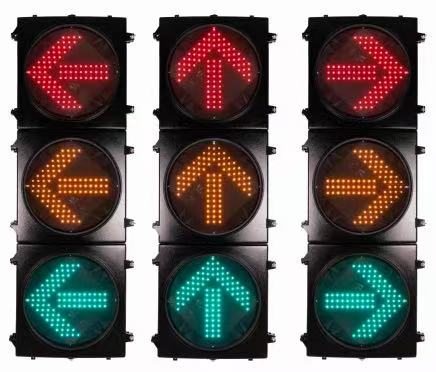


Company Profile
Yangzhou Shineyo Lighting Technology Co.,Ltd. estalished in 2013. The company is engaged in the research and development of solar lamps. A comprehensive lighting company integrating production, sales and service, committed to green environmental protection and sunshine. The main products are: solar street lights,LED street lights, street light poles,solar flood lights and traffic lights.
Why Choose Us
Our factory
Yangzhou Shineyo Lighting Technology Co.,Ltd. estalished in 2013. The company is engaged in the research and development of solar lamps. A comprehensive lighting company integrating production, sales and service, committed to green environmental protection and sunshine.
Our product
The main products are: solar street lights,LED street lights, street light poles,solar flood lights and traffic lights.
Reliable quality
The company has a high reputation in China for its professional production of new road lighting lamps with advanced level. Our products are reasonable in design, beautiful in appearance and reliable in quality.
Our service
Customers can contact us at any time through the website, phone, email, etc. Our professionals will provide customers with quotes within 24 hours, and answer a variety of product-related questions.

Aluminum lamp posts are lightweight, have good wind resistance and are easy to process, and can be customized with various styles and appearances of street lights.
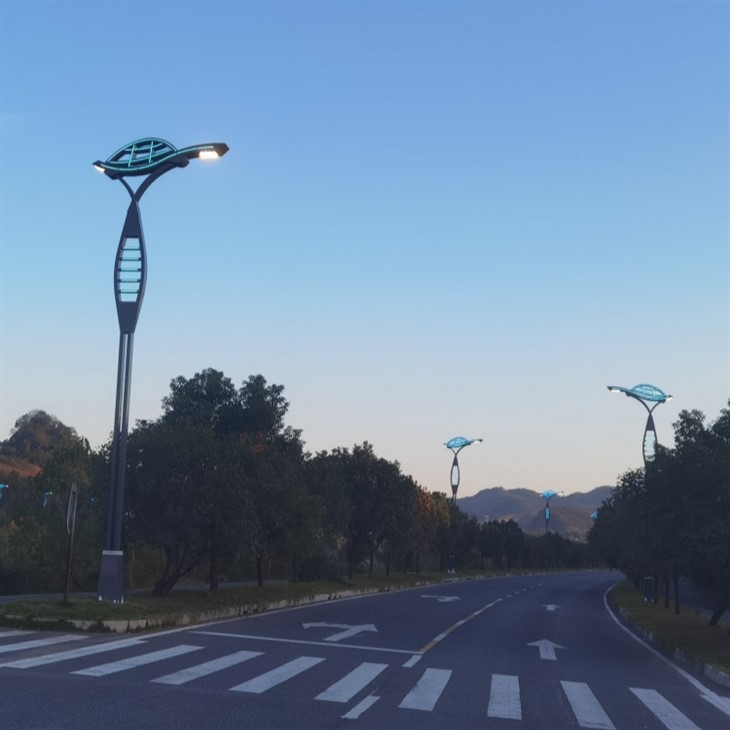
In urban streets, parks, squares, gardens, villas, by the sea, and other areas, this solar street light pole is extensively used.

Traffic applications use tubular steel poles to support traffic signals and important road signs. Traffic poles, which are made to function well in both low- and high-volume environments, are essential for informing vehicles of impending traffic signals and assisting in preserving the flow of traffic.

High mast light pole generally refers to a new type of lighting device composed of a steel conical lamp pole and a high-power combination lamp frame that is over 15 meters long. It consists of a lamp head, internal lighting fixture electrical, pole body, and basic components.

A safer atmosphere is created by the Outdoor Street Light Pole, which greatly improves visibility in a variety of outside spaces, such as roadways, patios, backyards, and exteriors.

Outdoor LED Solar Street Lighting Light Lamp Pole 3m 5m 6m 7m 8m 9m 10m 12m,5 meter street light pole.5 Meter Street Light Pole meets the lighting requirements of most roads while saving material costs. A height of 5m is more suitable for installation, providing convenience for the installation of lamp posts.

Solar Led Street Light with Pole
Solar led street light with pole has a wide range of application scenarios, such as urban streets, rural areas, parking lots, high highways and so on. This product makes lighting more convenient.Solar LED street light with pole is the most important part of road lighting. A good street lamp post needs to be practical and aesthetically pleasing, as it directly reflects the engineering and lighting quality.

Our Galvanised Lamp Post is a great choice for outdoor lighting applications because of their various features and advantages.In addition to being suitable for use with street lanterns, floodlights, or post top amenity luminaires, galvanized lamp posts are standard-duty lighting columns that can be used for a wide range of applications, including roads, parking lots, residential areas, and general amenity areas.

The device is a great option for retailers searching for low-maintenance lighting solutions because it is simple to install and requires little upkeep.
What is High Mast Light Pole?
High mast light pole are used to provide light to large areas like shipyards, highways, large warehouses, stadiums, parking lots, etc. These lights are usually installed on 40-150 ft tall poles, with 4-6 lights attached on each of the poles. High mast lights are the best options for illuminating a large area as they are mounted at a considerable height to distribute the light uniformly.The lights are primarily designed to provide an extended lighting coverage and also to minimize shadows that may occur when shorter poles are used. The poles have low density, creating fewer physical obstacles and improving safety.
Cost-effective
Since most high mast poles use led lights, it increases their longevity, and the process also ensures that the generated voltage degrades slowly and gradually. This helps extend the led lights' lifespan, making them cost and energy efficient. High mast lightings use lamps or halogens of high wattage, which reduces electricity bills.
Lighting performance
High lighting levels offer maximum coverage. This is one of the crucial benefits of high mast light poles, as they do not emit heat or infrared light. They also consume less electricity, thus making them energy efficient. The multi-point design of the high ly distributes light in different directions.
Environmentally friendly
Previously used hid lamps for high mast light poles were not environmentally friendly due to the generation of high-pressure sodium, mercury vapor, and metal halides. However, high mast led lighting systems are free of any toxic gasses, thus making them harmless for the users and environment.
Durability
Leds in high mast pole lighting make them an excellent investment for corporate solutions, mostly because the cost and time are saved due to the reduced need for maintenance.
Types of High Mast Light Pole
Stadium mast
As outdoor sports and high-definition sports television broadcasts grow in popularity, sports venues need to be equipped with high-quality lighting. Fans and players alike benefit from optimum lighting. It is critical that players see clearly as the game picks up speed. As fan expectations rise, so do ticket prices, and the quality of the broadcast and viewing experience must always exceed the standards of high-definition broadcasts and technologies. Therefore, stadium masts are installed in stadiums, fields, and playgrounds to provide lighting during the evening hours.
Flag mast
Whether you raise your flag once or raise and lower it each day, a flag mast is essential. Whether it is a government facility, college or university campus, sports venue, commercial enterprise, park or even for personal use, a custom-engineered flag mast that is easy to use, backed by decades of pole design and manufacturing experience, is indispensable. Tapered flag mast designs reduce wind-induced damage and prolong the life and durability of the mast.
Signage mast
If you run a business where your customers have to find your location, such as a gas station, a grocery store, or a repair shop, signage masts are the best way to attract customers and highlight your brand. Installing signage masts near high traffic roadways provides optimum visibility and leaves a lasting impression on customers' minds.
Solar mast
In light of non-renewable resources' limited and scarce nature, it is our responsibility to conserve them. Solar high mast provides light to a wide area without using conventional electricity or requiring costly electrical networks. It is advisable to use solar masts in areas where electricity is not readily accessible or where saving electricity is the highest priority. Solar masts are more reliable than conventional lighting systems since they are shock, vibration, and impact resistant.
High mast lighting systems
High mast lighting is a type of site light fixture raised high to minimize ground-level obstructions and create uniform illumination across a massive space. The use of high mast lighting systems minimizes shadows that may result from using shorter poles. High mast lighting plays an exclusive role in facilitating night-time travel and transportation, citizen engagement in social gatherings and sports/recreation activities, around-the-clock industrial production, safety and guidance of traffic, and security of commercial, residential and public facilities and properties.
Preparing the mast for installation
Before installation of high mast poles, it is important to check all accessories are at the erection site or not. Check the pitch circle diameter (pcd) and diameter of the foundation bolts for installation.
The bottom section and middle section of the pole are laid on the round wooden block. The middle section is then inserted into the bottom section keeping a distance of 20mm. The chain pulley block is fixed at the base plate of the mast, after that the pulley is fixed with the flange and the hook is fixed with the top end. After that, all sections are pulled by the chain block.
Mast head assembly
The head frame of the high mast poles is fitted with wire ropes and cables inserted inside the mast with the help of nylon rope. The nylon rope is inserted in the longitudinal section of the pole during the assembly of other sections.
The wire ropes and cables are passed onto the pulleys of the head frame. The pulley is a non-corrodible material that has a self-lubricating brush bearing attached with a stainless steel spindle of a diameter appropriate with rope and cables. When the wire and ropes are passed on the pulley, it is attached to the stopper clamp that is welded on the base section of the mast.
The poles have either three-point suspension or two-point suspension. In the case of three-point suspension, a part of the cable pulley of the heard frame assembly arrangement is kept behind the door side, while in tow-point suspension both pulley arrangement of the head frame is kept on the sides of the door.

Foundation bolt assembly
To ensure the foundation of the poles is right and it does not fall over during harsh weather conditions, it is necessary to have proper foundation assembly. As foundation bolts are important for structural safety, it is critical to check whether or not the bolt threads are greased and cleaned. The nuts are fixed 15mm above the ground at the same height to ensure nuts are in one place.
Elevation of assemble mast
After assembling each part of the mast carefully, and checking the nuts and bolts of the mast, the final point is to elevate the structure above the ground. The center of gravity is determined and a sling is placed in that position. A straining of rope with shackles is secured with the sling to adjust the crane hook with it. Finally, the assembled mast is lifted.
Electrical system
At the masthead, cables are attached to the lantern carriage. This is fitted with luminaires, cg box, and junction box.
High Mast Light Pole: Understanding Its Parts And Functions
Mast: The mast is the central supporting structure of the high mast light. It is typically a tall, vertical pole made of durable materials such as steel or aluminum. The primary function of the mast is to elevate the light source to a considerable height, allowing for wide-area coverage and improved visibility. Additionally, the mast provides stability and support for the entire lighting system.
Luminaire: The luminaire, also known as the light fixture, is the component that houses the light source and optics. It is designed to distribute light evenly across the target area, ensuring optimal illumination. The luminaire may incorporate features such as adjustable angles and lenses to control the direction and spread of light, allowing for customized lighting patterns based on specific requirements.
Light source: The light source, often an array of high-intensity discharge (hid) lamps or light-emitting diodes (leds), is the heart of the high mast light. It generates the actual illumination and determines the quality and intensity of the light output. Hid lamps are known for their high lumen output, making them suitable for large outdoor spaces, while leds offer energy efficiency and long lifespan, reducing maintenance costs.
Control system: The control system encompasses various components such as photocells, timers, and dimmers, which regulate the operation of the high mast light. Photocells, for instance, automatically switch the lights on at dusk and off at dawn, providing energy savings and convenience. Timers allow for programmed scheduling of lighting operations, while dimmers enable adjustment of light intensity to meet specific lighting needs.
Electrical components: The electrical components of a high mast light include wiring, ballasts, and surge protection devices. Wiring connects the various electrical elements of the lighting system, ensuring proper distribution of power. Ballasts are used to regulate the voltage and current supplied to the light source, optimizing its performance and longevity. Surge protection devices safeguard the system against voltage spikes and electrical surges, preventing damage and downtime.
Foundation: The foundation serves as the base of the high mast light, providing stability and structural support. It is typically a concrete structure that is securely anchored to the ground, ensuring the integrity of the entire lighting system, especially in adverse weather conditions.
Things to Consider Before Buying High Mast Light Pole
Mast dynamic loading
For coastal locations, the mast structure must meet the requirements of is: 875/1987 (part iii) and be capable of withstanding an assumed maximum reaction caused by wind speeds of 180 km/h (50 m/sec; three-second gust) for inland locations, and 225 km per hour (62.5 m/sec; three-second gust) for coastal locations. The mast must have a minimum design life of 25 years. The technique of construction will dampen wind-excited oscillations, and the associated stresses will be adequately accommodated.
Structure
It is required that the high mast has a 20-sided polygonal cross-section with a continuously tapered cross-section, providing a pleasant and attractive look and dependable performance and service. It is required that for wind speeds up to 50 m/sec, the mast's top and bottom a/f dimensions are 200mm and 540mm, respectively, and 200mm and 610mm, respectively, for winds up to 62.5 m/sec. When the wind speed is 50 m/sec, the plate thickness is 5 mm on the bottom and 4 mm on the top; when the wind speed is 62.5 m/sec, the plate thickness is 6 mm on the bottom and 4 mm on the top. If the ship is going 50 mph, the mast flange should be 650 millimeters in diameter and 30 millimeters thick. If the ship is going 62.5 miles per hour, it should be 730 millimeters in diameter and 30 millimeters thick.
Construction
When used in inland areas, the mast's wind resistance must be at least 180 kmph (50 m/sec), whereas, in coastal sites, it must be at least 225 kmph (62.5m/sec). Fabricated from bs en 10025 or equivalent steel plates, with the minimum yield strength of 355 n/sq.Mm and silicon content in steel of less than 0.06 percent, the mast shall be cut and folded to form polygonal sections with 20 sides, then welded with an automatic submerged-arc welding machine. The steel plates shall meet the minimum yield strength requirements.
The mast must not have any onsite welding or bolted joints. Only one longitudinal weld is required on the high mast shaft, with no circumferential weld. The overlap distance must be at least 1.5 times the diameter of the hole at which it will be drilled.
An unlaminated and unincluded full-penetrated flange must be supplied on the mast. The base flange's welded connection must be completely developed to meet the section's strength requirements. The base flange must have additional gussets between the bolt holes. The whole manufactured mast must be hot-dipped galvanized on both the inside and outside. The mast's deflection must be kept to less than a quarter of its design height in winds of two-thirds the design speed.
1. Check the hot-dip galvanized anti-corrosion condition of all ferrous metal components (including the inner wall of the light pole) of the high-pole lighting facilities, and whether the anti-loosening measures of the fasteners meet the requirements.
2. Check the verticality of the lighting facilities of the high mast (it must be measured and tested regularly with theodolite as required), and the allowable error of the pole tip should be less than 3‰ of the pole height. The straightness error of the light pole axis shall not be greater than 2‰ of the pole length.
3. Check the mechanical strength of the lamp panel to ensure the safe use of the lamp panel. For the closed lamp panel, check its heat dissipation.
4. Check whether the outer surface of the light pole and the welds are corroded. For those that have experienced a long service period but cannot be replaced again, use ultrasonic and magnetic particle inspection methods to detect and test the welds if necessary.
5. Check the fastening bolts of the lamp bracket, and adjust the projection direction of the lamp reasonably;
6. Carefully check the use of the wires (flexible cables or flexible wires) in the lamp panel to see if the wires are subjected to excessive mechanical stress, aging, cracks, exposed wires, etc. If any unsafe phenomena occur, they should be dealt with immediately.
7. Replacement and maintenance of damaged light source electrical appliances and other components.
7.Electrical safety performance inspection, check the insulation resistance between the power supply line and the ground: Not less than 10m.
9. Check power distribution and control equipment
(1) The power distribution line and the lamp panel line should be fixedly connected.
(2) The wire connection should be firm and reliable without loosening or falling off.
(3) Check the three-phase load balance and midnight light control.
(4)Check the connectors in the electrical room. When torsion, bending and vibration may occur, they should be fixed safely and reliably without loosening.
Our Factory
Yangzhou shineyo lighting technology co.,ltd. Estalished in 2013. The company is engaged in the research and development of solar lamps. A comprehensive lighting company integrating production, sales and service, committed to green environmental protection and sunshine. The main products are: Solar street lights,led street lights, street light poles,solar flood lights and traffic lights.


Certifications


